acf domain was triggered too early. This is usually an indicator for some code in the plugin or theme running too early. Translations should be loaded at the init action or later. Please see Debugging in WordPress for more information. (This message was added in version 6.7.0.) in /home/ulxplorlabs/public_html/site/wp-includes/functions.php on line 6131You know that thermal runaway is a phenomenon that can affect lithium-ion batteries. In order to understand thermal runaway, it’s important to understand what a lithium-ion battery is – and what it does.
Cells in a battery store, transform, and conduct energy.
A lithium-ion battery and circuit transform electrochemical energy into electrical energy and transmit that energy as a current to a device, which is known in a circuit as a “load.”
The opposite reaction also occurs: When a battery is being charged, the movement of electrons and ions transforms electrical energy into electrochemical energy. The battery stores this electrochemical energy.
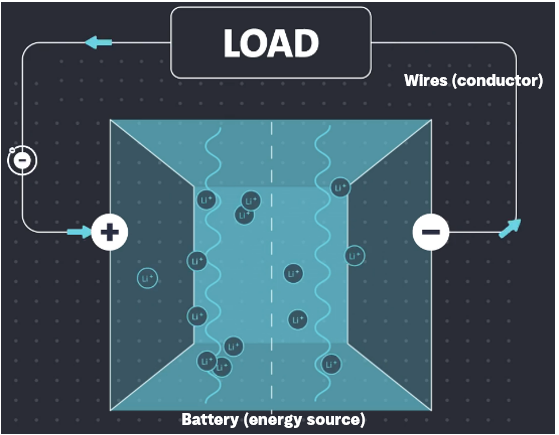
Batteries work within a circuit, which includes an energy source, a conductor, and a load (device receiving energy).
A short circuit occurs when electrical current flows on an unintended path where it meets too little resistance. A short circuit can happen inside or outside of a cell. The result is that too much electrical energy flows through this new path.
A short circuit within a lithium-ion battery can lead to thermal runaway.
Through the bologna test, we can visualize some forms of energy transfer. You can replicate the bologna test or observe it through the video.
The bologna test is performed with a lithium primary cell, which is not rechargeable. Lithium primary cells are different from lithium-ion cells, which are rechargeable. However, you could expect a similar reaction from a lithium-ion battery.
If you decide to try it out for yourself, make sure to follow the proper procedure and safety guidelines outlined in the demonstration guide.
The saline solution conducts electrical energy from the battery to the bologna, which blackens.
You’ve seen the video of this demonstration. Now, you can try it out yourself.
In the bologna test demonstration, you got to observe energy transfer external to a battery. Now, you can take a look inside a lithium-ion battery and discover what makes it work.
A lithium-ion battery is one type of battery. Lithium-ion batteries are powered by the movement of lithium ions between electrodes.
Lithium-ion batteries are often used because they:
In other words, lithium-ion batteries are small and powerful.
This is due to the chemical properties of lithium-ion battery components. Lithium-ion batteries can come in many types of shapes and sizes.
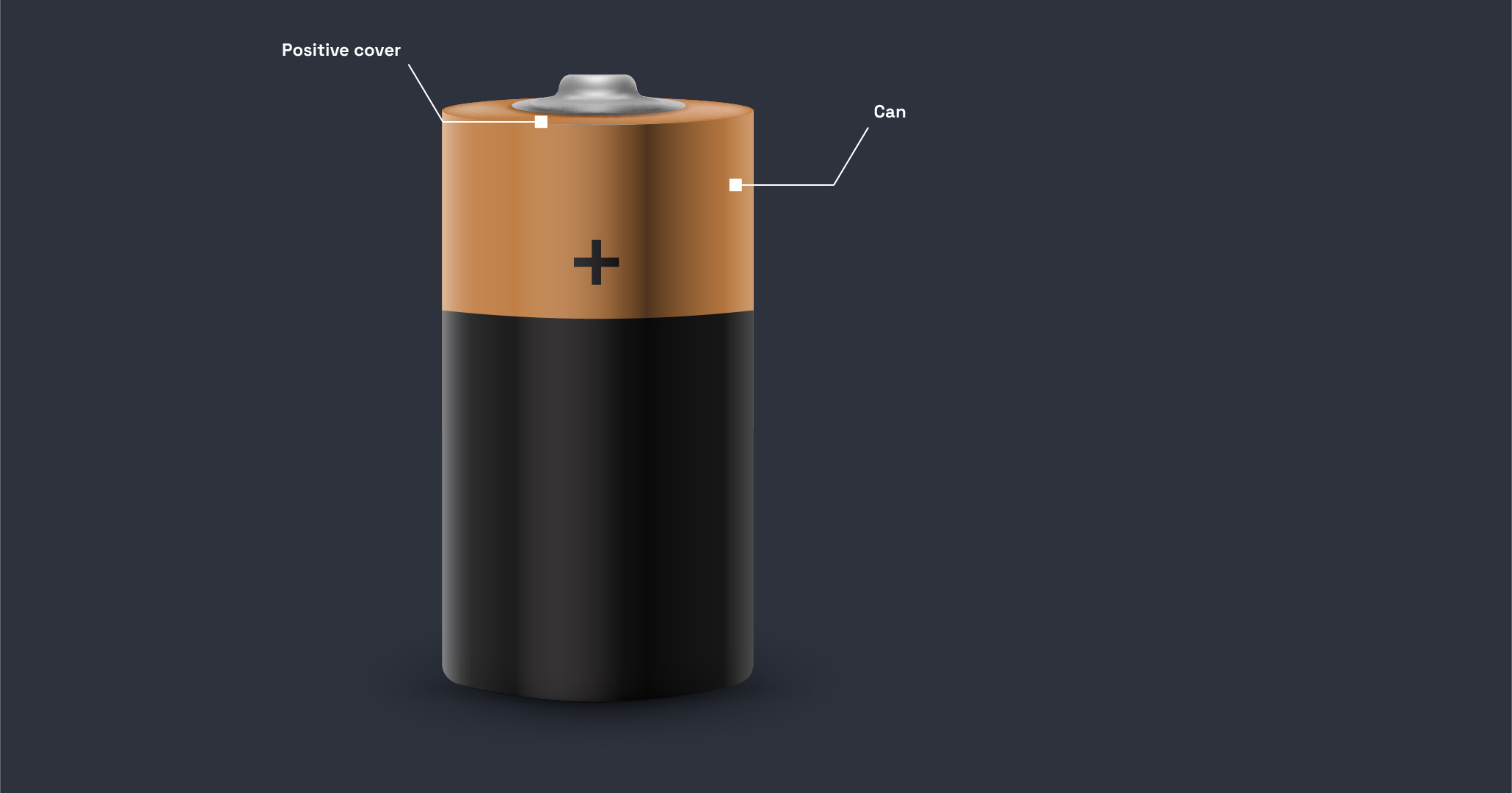
Of course, lithium-ion batteries are not the only kinds of batteries that people use. Here, you can compare and contrast some of the internal differences between a lithium-ion battery and an alkaline battery, which is another common type of battery.
In this example, the lithium-ion battery has a “spiral-wound” construction, while the alkaline battery has a “bobbin” construction. That accounts for many of the physical differences you see.
The charge and discharge process in a lithium-ion battery is exothermic, meaning it normally produces a bit of heat as a byproduct. It is normal for batteries to produce a small amount of heat.
Thermal runaway, however, is an abnormal production of heat.